The New Era of Inheritance: Values, Trust, and Long-Term Vision

Over the next two decades, the world will witness one of the largest financial transitions in history: the Great Wealth Transfer. According to the UBS Global Wealth Report, more than $83 trillion is expected to change hands in the next 20–25 years. Of this, $9 trillion will pass from Baby Boomers (1946–1964) to their spouses, while $74 trillion will shift across generations.

This unprecedented scale of wealth movement raises an urgent question: will the next generation preserve and grow this legacy — or will it dissipate?
The “shirtsleeves to shirtsleeves” challenge
Research consistently shows that wealth rarely survives beyond three generations. A well-known phenomenon, often called “shirtsleeves to shirtsleeves,” describes how fortunes are built by the first generation, enjoyed by the second, and often lost by the third. A 20-year study by the Williams Group revealed that 70% of high-net-worth families lose their wealth by the second generation, and 90% by the third.

The key drivers are not market downturns or poor investments, but family dynamics: lack of trust, weak communication, and the absence of shared values.
From inheritance to involvement
Traditionally, inheritance was about transferring assets through wills and legal structures. Today, families are increasingly realizing that simply passing down money is not enough. The new era of inheritance emphasizes early involvement of heirs, ensuring they not only receive wealth but also understand the values and practices that created it.
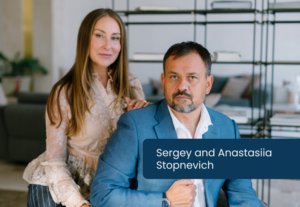
“We believe that the most important legacy is not money, but the habits, education, and values that allow wealth to be preserved and used responsibly,” says Sergey Stopnevich, founder of Wise Wolves Corporation.
Studies confirm this approach: engaging children in financial education and decision-making significantly increases the chances of long-term wealth preservation.

Wealth aligned with purpose
The new generation of heirs is not content with passive ownership. Surveys (e.g., UBS Global Family Office Report) show that younger generations prefer to align wealth with impact and purpose, seeking opportunities in philanthropy, impact investing, and sustainability.
Anastasia Stopnevich, board member of Wise Wolves Corporation, highlights:
“Charity work is an essential thread in our family vision. It brings us together around a joint mission and creates opportunities for every family member to contribute.”
This mindset reflects a broader shift: wealth is no longer just about private prosperity, but about responsibility and legacy.
Building structures that last
Preserving wealth is not about short-term wins. Families that succeed in passing down assets over generations adopt a long-term vision, often planning 10, 15, or even 20 years ahead.
“People who rush into things also lose them quickly. Our priority is to build structures that can withstand the test of time,” Sergey Stopnevich notes.
This includes robust governance, clear succession planning, transparent communication, and embedding family values into both commercial and philanthropic activities.
What lies ahead
The Great Wealth Transfer is not only an economic phenomenon but also a cultural one. The future of inheritance will depend on how families balance financial tools with human values. Those who succeed will be the ones who:
- Combine strategic planning with open dialogue,
- Pass on not only money but also trust, education, and responsibility,
- Align wealth with a broader purpose to stay relevant for the next generation.

As Sergey and Anastasia Stopnevich put it:
“We want our children to see that you can build something meaningful by being consistent, thoughtful, and fair.”
Conclusion
The new era of inheritance is not only about numbers, assets, or tax planning. It is about building families that last — where values are as carefully transmitted as wealth, and where trust becomes the true foundation of legacy.